
Stay Connected
Subscribe for Mental Health Tips Now!
Nunc imperdiet odio et urna dign issim, sit amet sagittis ex que.
Call us anytime
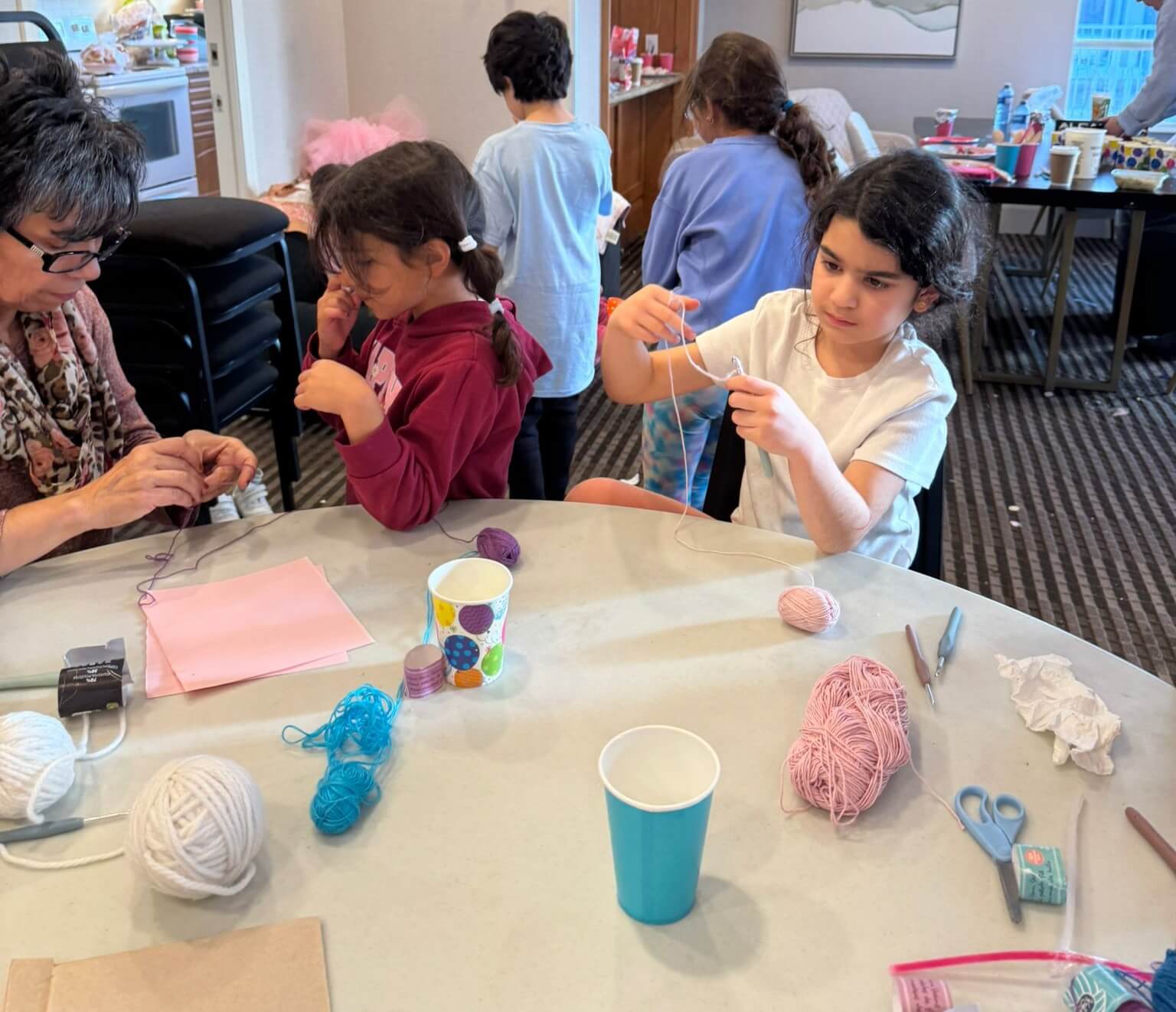
Developmental Benefits of Weaving for Children
1- Self-Regulation & Executive Function
Weaving requires:
- Sustained attention
- Sequencing and pattern maintenance
- Inhibitory control (over–under rhythm, tension control)
- Error detection and correction
These processes recruit executive attention and cognitive control systems, supporting:
- Effortful control
- Emotional regulation
- Attentional persistence
📌 Weaving functions as a naturally scaffolded executive-function task.
2- Rhythmic Regulation & Nervous System Calming
The repetitive over–under motion:
- Provides rhythmic, predictable sensory input
- Supports parasympathetic nervous system activation
- Promotes calm, focused states
📌 Aligns with bottom-up regulation models and rhythm-based regulation research.
3- Embodied Cognition & Pattern Recognition
Weaving links physical action with abstract structure:
- Pattern formation
- Spatial reasoning
- Cause-and-effect understanding
Children learn cognitively through their bodies, supporting embodied learning and early mathematical thinking.
4- Fine Motor Development & Bilateral Coordination
Weaving engages:
- Bilateral hand coordination
- Fine motor precision
- Visual-motor integration
This supports:
- Motor planning
- Hand strength and dexterity
- Sensory-motor integration
📌 Particularly beneficial for children with coordination or sensory processing differences.
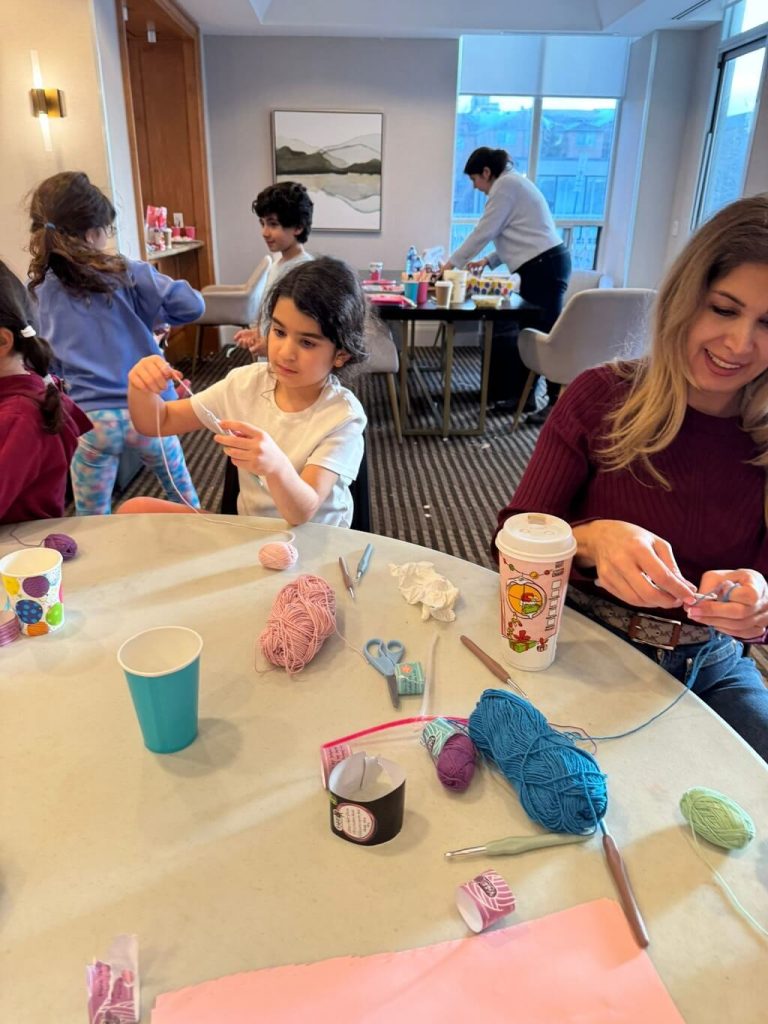
5- Emotion Regulation Through Focused Engagement
Weaving supports emotional regulation by:
- Narrowing attentional focus
- Reducing cognitive rumination
- Externalizing emotional energy into structured action
Children often experience:
- Reduced anxiety
- Increased calm
- Improved frustration tolerance
📌 Especially effective for children who struggle with verbal emotion regulation.
6- Tolerance for Mistakes & Cognitive Flexibility
Weaving naturally includes:
- Misalignments
- Pattern errors
- Opportunities for repair
This supports:
- Growth mindset
- Adaptive coping
- Emotional flexibility
📌 Errors are visible, reversible, and non-threatening.
7- Sense of Agency, Mastery & Competence
The visible accumulation of rows provides:
- Immediate feedback
- Clear progress markers
- Mastery experiences
This strengthens:
- Self-efficacy
- Internal locus of control
- Motivation and persistence
📌 Central to self-determination theory (competence, autonomy).
8- Narrative, Identity & Meaning-Making
Weaving supports:
- Personal expression through color and design
- Cultural and historical connection
- Identity exploration through making
For many children, weaving becomes a non-verbal narrative of self.
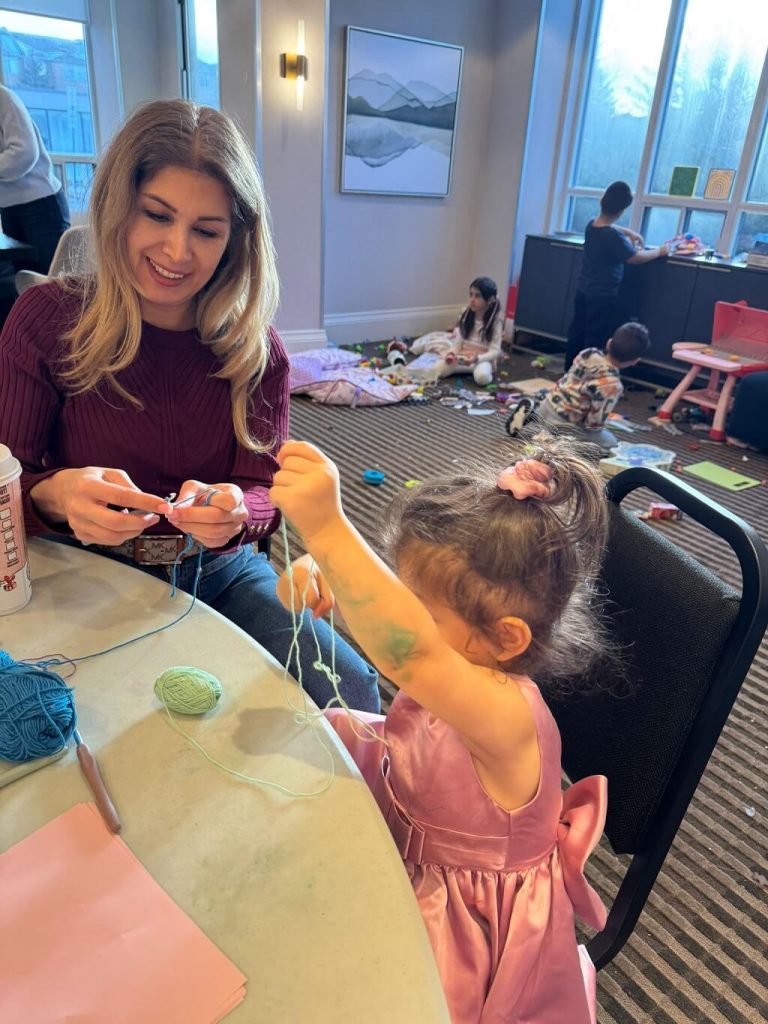
9- Social Development & Co-Regulation
In group contexts, weaving encourages:
- Shared rhythms and pacing
- Observational learning
- Peer co-regulation
The calm nature of the task supports low-arousal social engagement.
10- Mental Health & Preventive Value
Weaving acts as a:
- Containment activity for anxiety
- Focused regulation tool
- Preventive mental-health support
📌 Particularly valuable in trauma-informed, neurodiversity-affirming settings.
Why Weaving Is Developmentally Powerful
Weaving uniquely integrates:
- Rhythm and repetition
- Fine motor control
- Cognitive sequencing
- Emotional regulation
- Meaningful creation
It engages multiple developmental systems simultaneously, making it a high-value intervention tool.
Applications in Developmental Contexts
Weaving is well-suited for:
- School-based SEL programs
- Executive-function interventions
- Anxiety-reduction supports
- Cultural and identity-based curricula
- Occupational and developmental therapy settings
Opening Hours
Monday
08:00 AM - 06:00 PM
Tuesday
08:00 AM - 06:00 PM
Wednesday
08:00 AM - 06:00 PM
Thursday
08:00 AM - 06:00 PM
Friday
08:00 AM - 06:00 PM
Saturday
08:00 AM - 06:00 PM
Sunday
08:00 AM - 06:00 PM
Book Appointments
Our Belief
We believe that when children are given space to play, create, and express themselves mindfully, they develop the emotional skills needed to feel safe, confident, and connected. Through play and art, therapy becomes a place of exploration, healing, and growth.