
Stay Connected
Subscribe for Mental Health Tips Now!
Nunc imperdiet odio et urna dign issim, sit amet sagittis ex que.
Call us anytime
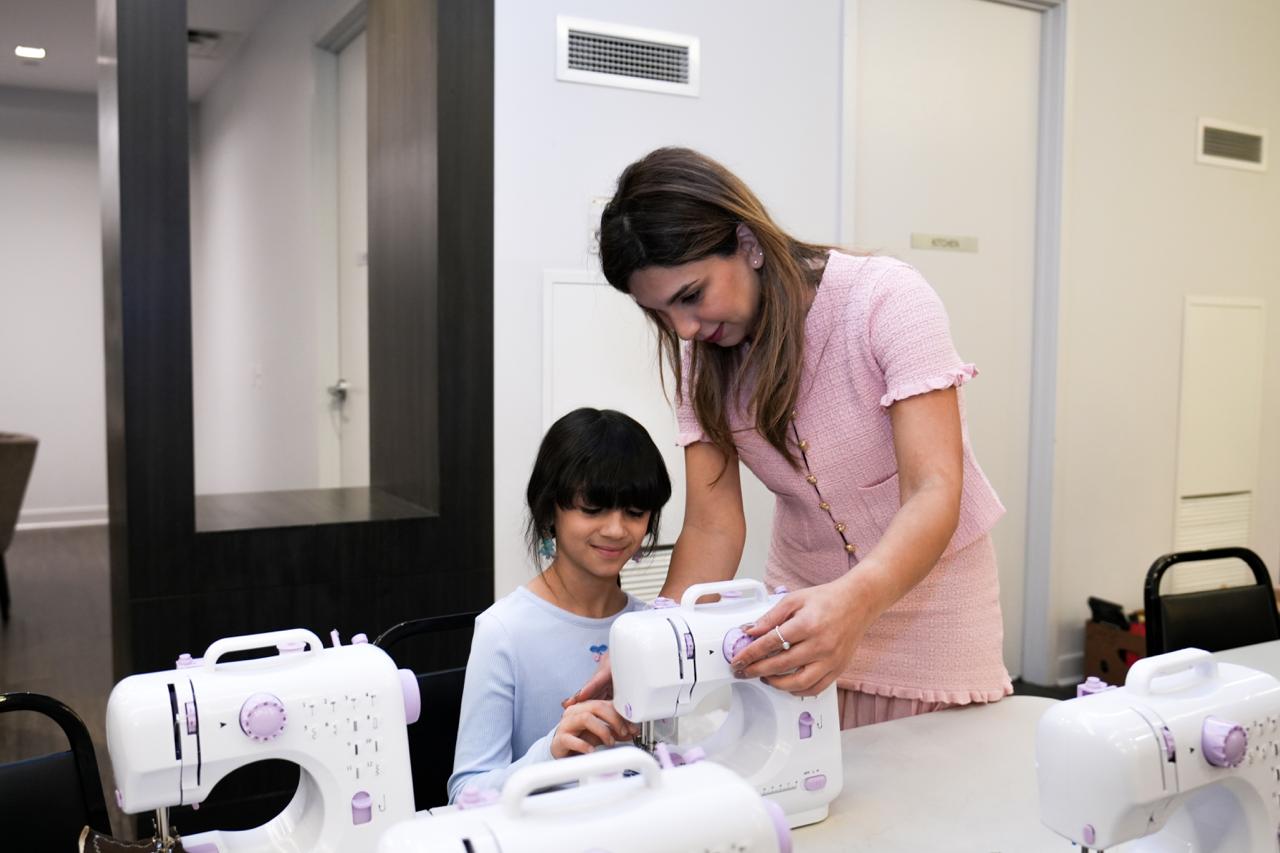
Developmental Benefits of Sewing Machine Use for Children
1- 1. Executive Function & Self-Regulation
Operating a sewing machine requires:
- Sustained attention
- Sequencing and planning
- Inhibitory control (speed, hand placement, stopping/starting)
- Error monitoring and adjustment
These demands directly engage executive function systems, particularly:
- Cognitive control
- Working memory
- Behavioral regulation
📌 Sewing is a natural executive-function training task, embedded in meaningful activity.
2- Fine Motor Control & Sensorimotor Integration
Sewing integrates:
- Bilateral coordination (hands working asymmetrically)
- Eye–hand coordination
- Tactile, proprioceptive, and visual input
This supports:
- Motor planning
- Sensory integration
- Precision and graded force control
📌 Particularly beneficial for children with developmental coordination challenges or sensory modulation differences.
3- Emotion Regulation Through Task-Based FocusSewing promotes state regulation by:
- Inducing focused attention (flow-like states)
- Reducing cognitive rumination
- Providing predictable, rhythmic motor output
- Reduced anxiety
- Increased calm
- Improved frustration tolerance
4- Tolerance for Frustration & Error-Based Learning
Sewing inherently involves:
- Mistakes (uneven seams, broken threads)
- Problem-solving and repair
- Iterative improvement
This supports:
- Growth mindset
- Adaptive coping
- Emotional flexibility
📌 Errors are externalized and correctable, reducing shame and supporting resilience.
5- Sense of Agency, Competence & Mastery
Sewing provides concrete, visible outcomes, reinforcing:
- Self-efficacy
- Internal locus of control
- Mastery motivation
Children experience:
“I can create something functional and real.”
📌 Central to self-determination theory (competence, autonomy).
6- Cognitive Sequencing & Planning
Sewing involves:
- Following multi-step procedures
- Anticipating outcomes
- Translating abstract patterns into physical form
This supports:
- Procedural memory
- Cognitive flexibility
- Metacognitive monitoring
📌 Relevant to developmental models of planning and goal-directed behavior.
7- Emotional Expression & Identity Development
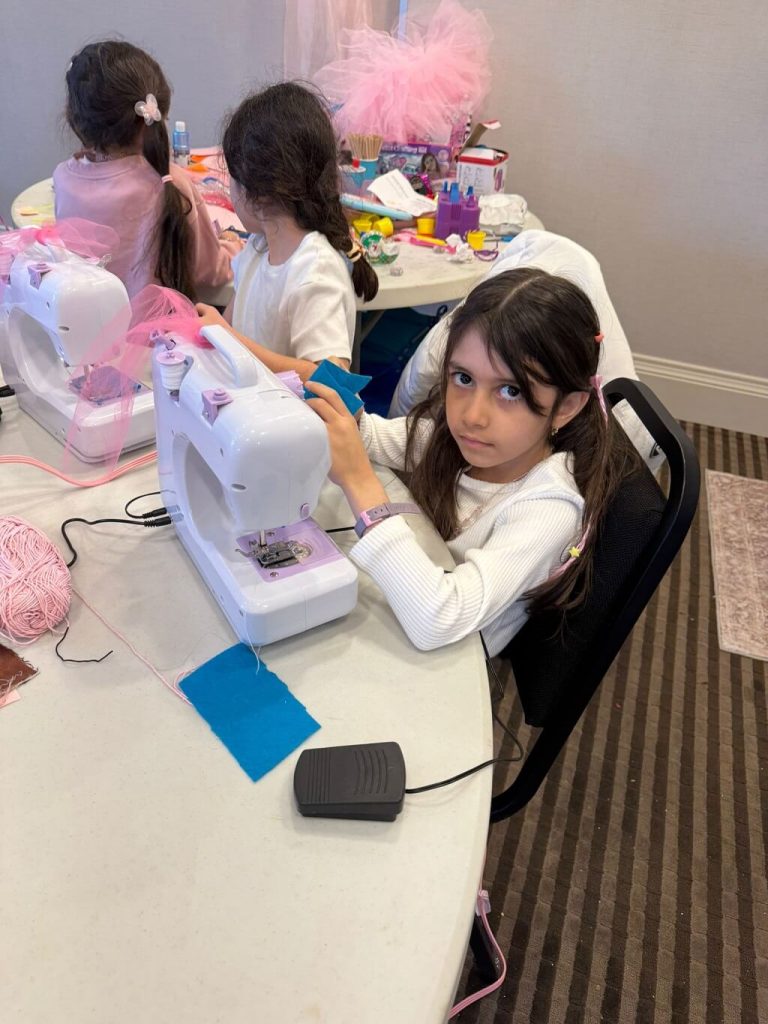
Sewing allows:
- Personal choice (fabric, color, design)
- Creative self-expression
- Identity exploration through making
For some children, especially those less verbally expressive, sewing becomes a non-verbal emotional outlet.
8- Attention Regulation & Flow States
Extended sewing tasks can induce flow-like attentional states, characterized by:
- Deep engagement
- Reduced external distraction
- Positive affect
📌 Flow states are associated with improved well-being and intrinsic motivation.
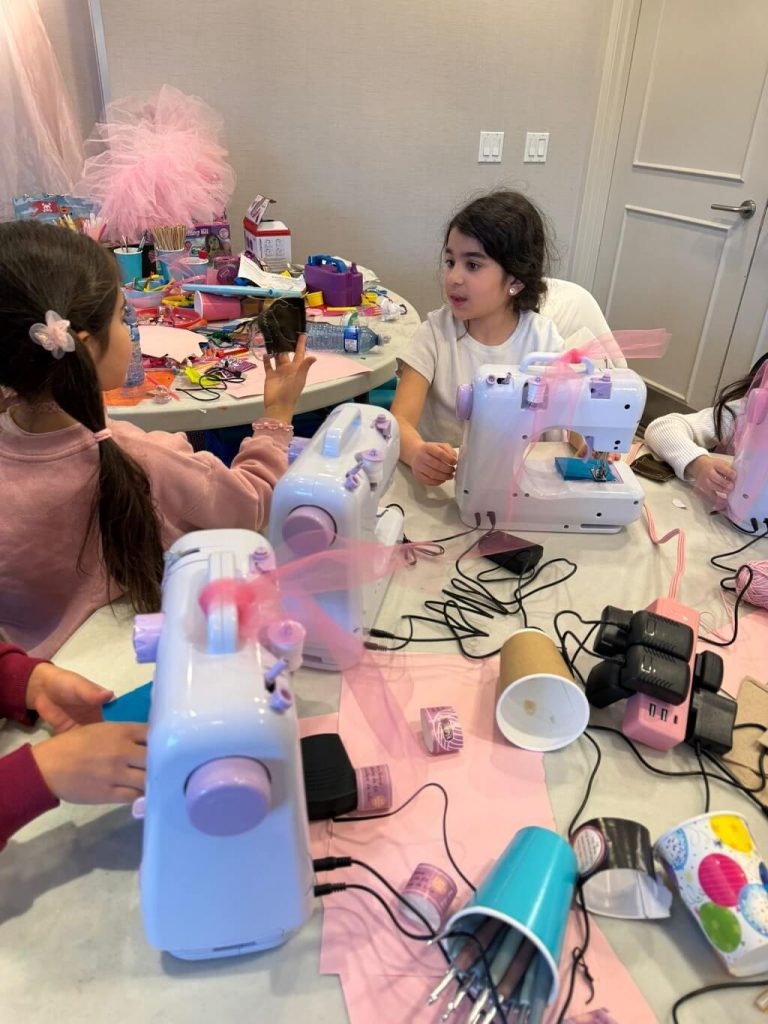
9- Social Development & Co-Regulation
When done in shared settings, sewing supports:
- Turn-taking and collaboration
- Observational learning
- Adult–child co-regulation
It creates a low-arousal, relational learning environment.
10- Mental Health & Preventive ValueAs a structured, creative, skill-based activity, sewing:
- Reduces anxiety through predictability
- Supports emotional containment
- Enhances self-worth
Why Sewing Is Developmentally Distinct
Sewing uniquely integrates:
- Cognitive control
- Motor coordination
- Emotional regulation
- Creativity
- Meaningful productivity
This makes it a developmentally rich intervention, not merely a craft.
Applications in Developmental Contexts
Sewing is well-suited for:
- School-based SEL programs
- Executive-function interventions
- Anxiety-reduction supports
- Neurodiversity-affirming practices
- Trauma-informed educational settings
Opening Hours
Monday
08:00 AM - 06:00 PM
Tuesday
08:00 AM - 06:00 PM
Wednesday
08:00 AM - 06:00 PM
Thursday
08:00 AM - 06:00 PM
Friday
08:00 AM - 06:00 PM
Saturday
08:00 AM - 06:00 PM
Sunday
08:00 AM - 06:00 PM
Book Appointments
Our Belief
We believe that when children are given space to play, create, and express themselves mindfully, they develop the emotional skills needed to feel safe, confident, and connected. Through play and art, therapy becomes a place of exploration, healing, and growth.